

RSI - CPO2H Distinguished Lecture 2026
Speaker: Sean Raymond, Laboratoire d'Astrophysique de Bordeaux, CNRS, Université de Bordeaux, France
Time: 4-5 PM, reception to follow
Topic: The Solar System as a Peculiar Outcome of Planet Formation
Decades of exoplanet observations have confirmed one of humanity's (and all teenagers') worst fears: we are strange. Even though Jupiter is the only Solar System planet detectable with present-day technology, the Solar System is quantifiably unusual among exoplanet systems at the ~1% level. Instead, roughly half of main sequence stars host close-in "super-Earths" or "sub-Neptunes", and ~10% have Jupiters on non-Jupiter-like, eccentric or close-in orbits.
In this talk I will explore how the Solar System fits in a larger context by addressing key steps in planetary system formation. I will present models to explain the diversity of observed planetary systems and show how Earth-sized can sometimes be very non-"Earth-like", with extreme compositions, orbits and climates. While many unanswered questions remain, it seems clear that, when they form, giant planets play a decisive role in the sculpting of their planetary systems and that Jupiter was central to shaping our unusual Solar System.
Inner Solar System Workshop
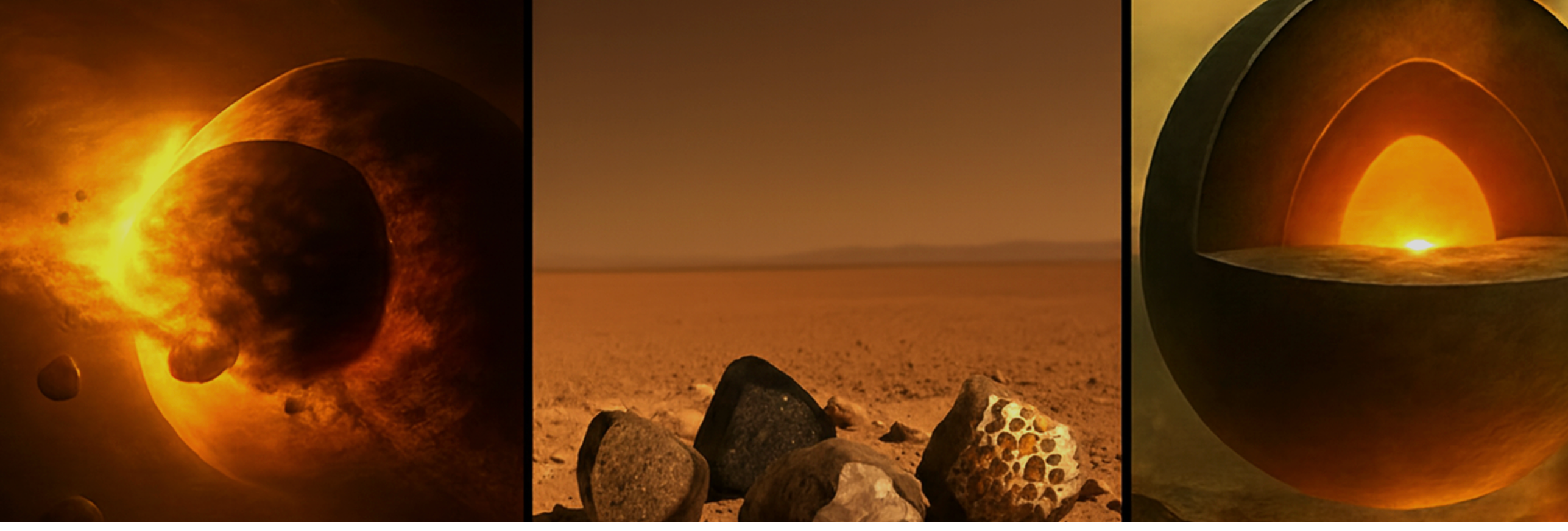
The formation and long-term evolution of rocky planets involve tightly coupled physical, chemical, cosmochemical, and dynamical processes operating across a wide range of spatial and temporal scales. Recent advances in astronomical observations, laboratory experiments, meteoritic analyses, and numerical modeling now allow these processes to be studied within a more integrated and quantitative framework.
This workshop brings together researchers working on planet formation and evolution, cosmochemistry, interior dynamics, geochemistry, and surface evolution to foster cross-disciplinary discussions and to identify key open questions regarding the origin, differentiation, and long-term evolution of rocky worlds.
Thematic Areas:
- Accretion of Terrestrial Planets, Solar System Formation and Evolution: Physical and dynamical processes governing the growth and evolution of planets in the solar system.
- Geochemistry and Cosmochemistry of Astromaterials and Volatile Delivery: Constraints from meteorites, isotopes, and laboratory analyses on planetary compositions and volatile acquisition.
- Planetary Differentiation and Interior–Surface Exchanges Through Time: Coupled chemical and physical evolution linking planetary interiors, surfaces, and atmospheres.
Upcoming Public Night at the Campus Observatory
The next Rice University Observatory Open House will be hosted by Professor Patricia Reiff, with observing on the Brockman terrace from 6:30 until about 9:30 pm.
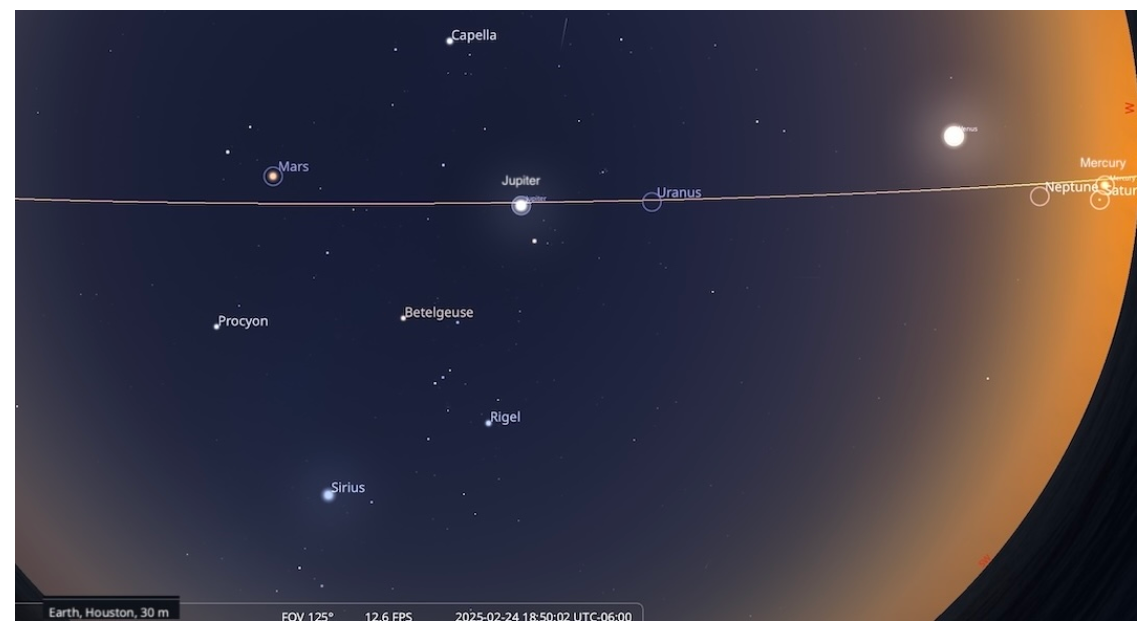
Sunset is early and Saturn and Mercury are ONLY visible from about 6:40 - 6:55, so come early if you want to catch them. Jupiter and Mars will both be up and will be bright. Bring warm clothing! Note - if you have a west-ward looking balcony or roof observing location, you can see Mercury getting higher in the western sky each day just after sunset but Saturn is getting lower and harder to spot. On the 28th, the Moon will be between them at sunset!
- Location: Brockman Hall for Physics (NOT FOR OPERA), observatory deck (4th floor). Elevator (and bathrooms) are on the east wing of the building.
- Parking: The closest parking is in the "North Lot", between entrances 20 and 21. Use a credit card for entry and exit. Less expensive parking in the Greenbriar lot, west of the stadium.
- Weather: Take a look before you come… if you can’t see brilliant Venus in the west, you probably can’t see much from the observatory. Backup day will be Tuesday but right now Monday looks the best. Enjoy!!
Subscribe to the Mailing List to receive email reminders for upcoming lectures and events.